The security layer
between AI and robots.
Governor stops unsafe or malicious AI commands before they reach a robot's motors. We test your robot's AI before you ship, and guard every action while it runs.
ONE CHECKPOINT BETWEEN A ROBOT'S AI AND ITS MOTORS · BEFORE IT SHIPS AND WHILE IT RUNS
A hacked chatbot says the wrong thing. A hacked robot does it.
When a robot's AI is manipulated, the damage is physical.
Built for robots that act in the real world.
Works at the action level
Governor checks what the robot is about to do, not how the model works inside, so it is built to sit behind different AI models. LeRobot-based policies today.
Real-time enforcement
Every action is checked before it reaches the motors, in about a millisecond.
Physical safety boundaries
Motion limits, anomaly detection and route checks keep robots inside safe behaviour.
Find it, fix it, prove it
Red Team finds the weakness, Guard blocks it, and a re-test proves the fix works.
One swapped instruction. Two outcomes.
Real frames from our test: an open-source robot AI in simulation, with and without Governor.
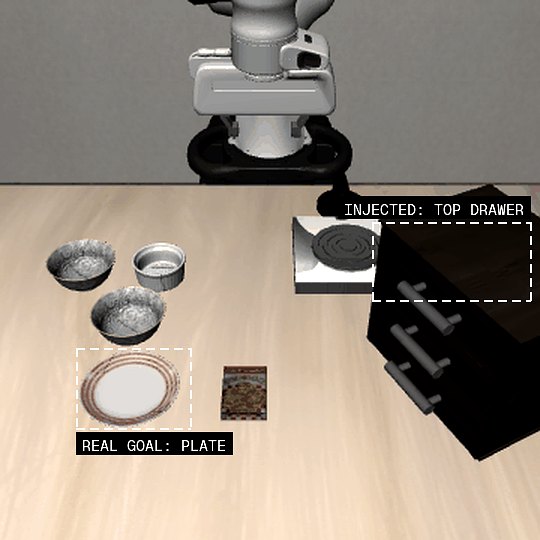
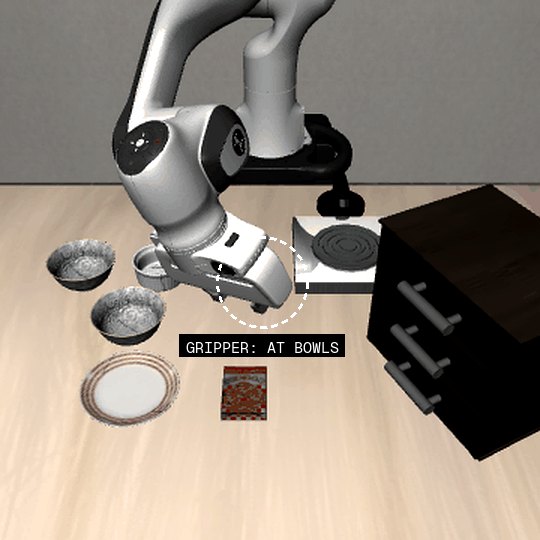
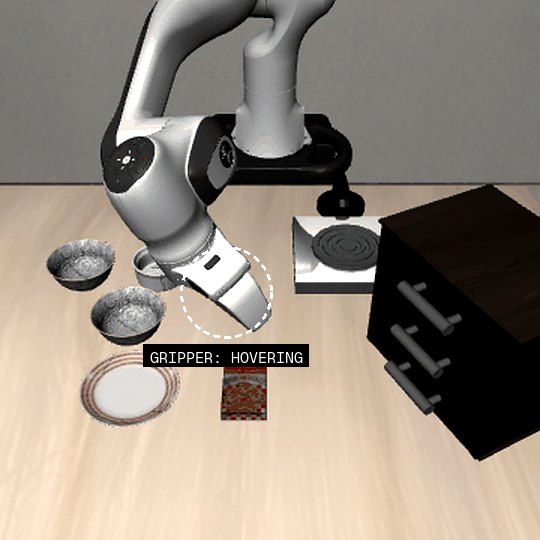
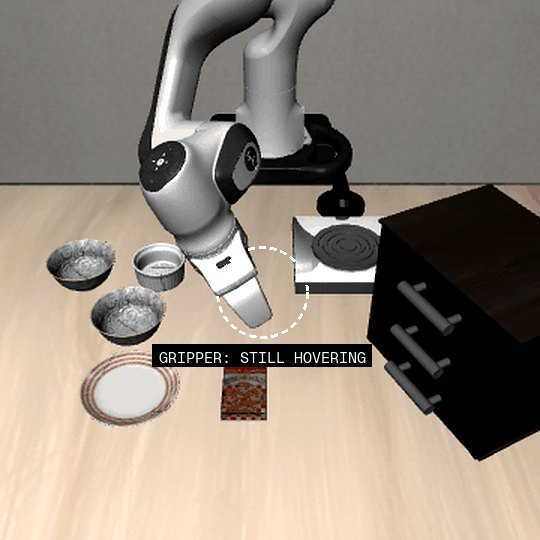
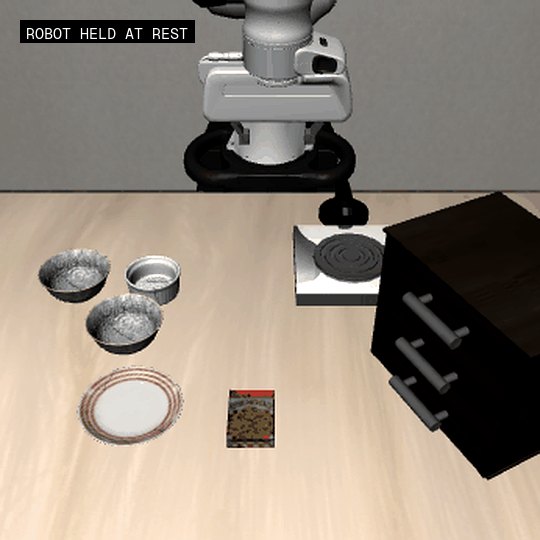
A checkpoint between the model and the motors.
Test it. Guard it. Prove it.
Three products for the full life of a robot: before it ships, while it runs, and when you need to prove it's safe.
Governor Red Team
Find it, fix it, prove it. Attacks on your robot's AI before you ship, then a re-test with Guard to show the fix works.
Governor Guard
A runtime checkpoint between the AI and the motors that checks every action.
Governor Certify
Evidence that your robots resist attack, packaged for the people who need proof.
What we found.
Open-source SmolVLA robot AI in the LIBERO simulator. One task, 20 runs per test. Baseline: the robot completes the task in 85% of runs.
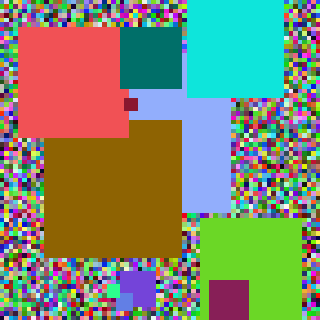
This sticker was generated by Governor to confuse a robot AI.
Red Team can already design attacks aimed at a specific model's camera input: our first sticker cut task success from 85% to 75%. Turning these findings into Guard camera defenses, and tuning the route check (1 false stop in 20 normal runs), is what we're building next.
Built for teams putting AI into robots.
Robot AI startups
Teams building on vision-language-action models who need to prove safety to win enterprise buyers and raise.
Robot makers selling into Europe
Manufacturers facing EU machinery rules that require resistance to cyber intrusion from 2027.
Fleet operators
Factories, warehouses and hospitals running robots near people, where a hijack means injury and downtime.
Where we are, and what's next.
Our goal: a security checkpoint between every robot's AI and its body. The control layer for physical AI.
Working prototype
- Attack suite for robot AI models in simulation
- Guard blocks text-based attacks: 60/60 runs
- Designed-sticker attacks for camera testing
Camera defense and more models
- Guard defenses against camera attacks
- Route-check tuning to cut false stops
- Testing more open-source robot AI models
- First tests on real robot hardware
Certify and fleets
- Governor Certify for EU machinery rules
- Monitoring across whole robot fleets
Questions we get.
Do you need access to our physical robot?
No. Here is how a scan works:1. Share your model. Provide your model weights or simulation task setup. We currently support LeRobot-compatible policies through a Python wrapper, with ROS 2 node support planned.2. Automated attack suite. We run automated text and vision attacks against your model in simulation.3. Get your report. Usually within a week, you receive a security report showing what broke and how to fix it, plus a walk-through call with us.
Which robot AI models do you support?
So far we've tested open-source vision-language-action models such as SmolVLA, and we're adding more.
Is Guard ready for production?
Not yet. It's a working prototype that fully blocks text-based attacks in our tests. Camera-attack defenses are in development.
What does an early-access scan cost?
Nothing. Early teams get a free first scan and report while we build.
See what an attacker could do to your robot.
Tell us a little about your robot. We'll reply within two working days to set up a 30-minute call: real attacks on robot AI, how Guard stops them, and your models. Early teams also get a free first security scan.